Give Your Outdoor Unit Room to Breathe
The big metal box beside your house moves a lot of air, and it needs open space around it to do that job.
October 13, 2026 · 4 min read
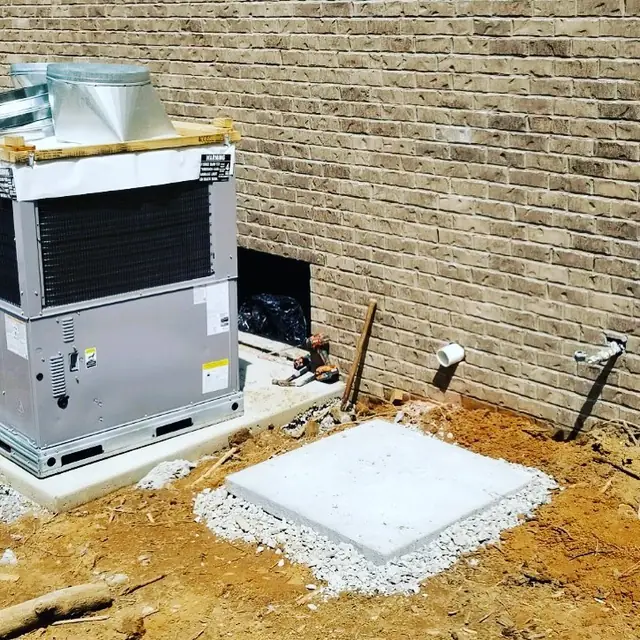
Most people think of the outdoor unit as something that sits there until it breaks. In fact it is working hard every hot day, pulling a large volume of air through a coil and pushing it back out. Anything that gets in the way of that air costs the system something. Master Mechanical shares a simple tip on this: covering your HVAC unit with an awning or enclosure can help it last longer, and clearing the bushes and shrubbery that could get into the system helps too. Both ideas come down to the same thing, which is giving the unit room to breathe.
What the outdoor unit is actually doing
The outdoor unit is called the condenser. Inside your home, refrigerant picks up heat from the air. That refrigerant travels outside to the condenser coil, where the heat has to go somewhere. A big fan pulls outdoor air across the coil, the air carries the heat away, and the refrigerant cools down and heads back inside to pick up more.
That is why airflow matters so much out there. If the coil cannot shed heat, the whole cycle slows down. The system runs longer, works harder and wears faster, and on a muggy Middle Tennessee afternoon you feel it as a house that never quite catches up.
Shrubs, vines and the slow creep of overgrowth
Plants grow toward the sun, and the warm, open area around a condenser looks like a great place to do it. Shrubs planted tight against the unit can start out fine and then fill in over a few seasons. Vines climb the cabinet and push in through the coil. Tall grass and weeds grow up through the base. None of it looks like much until the unit is wrapped in green.
Keep a clear zone around all sides of the unit and above it. Check your unit's installation manual for the clearance it calls for, or ask a technician what space your particular model needs. As a general habit, trim anything that reaches toward the cabinet, pull vines the moment you see them, and keep the top of the unit open, since that is where the warm air leaves.
Mowing, trimming and the clippings problem
Lawn work is one of the most common ways debris ends up in a condenser. A mower that throws clippings toward the unit coats the coil in wet grass, which dries into a mat that blocks air. A string trimmer can nick the coil fins and the refrigerant lines, and a damaged line is a repair, not a nuisance.
Point the mower discharge away from the unit and mow around it rather than toward it. Use a trimmer with care, or hand-clip the grass right at the base. Rake or sweep clippings away afterward. Falling leaves, cottony seeds and spring blossoms can also collect on the coil, so a glance after yard day is a good habit.
Awnings and enclosures done right
Shielding the unit from falling debris and direct weather is where an awning or enclosure earns its keep, which is the idea behind Master Mechanical's tip. The key is that the cover protects the unit without interfering with airflow. A cover only works if air can still move freely.
- Choose a design with open sides or slatted panels so air can flow in along the coil.
- Keep any roof or awning well above the top of the unit so the warm discharge air has somewhere to go.
- Never run the system with a solid cover, tarp or plastic sheet draped over the unit.
- Leave room for a technician to reach the access panels and the electrical disconnect.
- Keep the structure clear of the refrigerant lines and wiring that enter the cabinet.
If you are not sure whether a design leaves enough air, ask a technician to look at it before you build or buy. It is far easier to adjust an awning in the planning stage than to fix a unit that has been running starved of air.
A simple seasonal routine
You do not need to make this a big project. Walk the unit at the start of cooling season and again in the fall. Look for new growth, leaves stuck to the coil, fallen branches, and anything leaning on the cabinet. Pull or trim what you find.
If the coil looks dirty, turn the unit off at the thermostat and at the outdoor disconnect first. Then rinse it gently with a garden hose from the outside, at low pressure. Never use a pressure washer, since the fins bend easily and bent fins block air too. If the coil is packed with something a hose will not clear, that is a job for a technician.
Master Mechanical is a locally owned and operated company in Spring Hill, Tennessee, serving homes and businesses around Middle Tennessee with heating and air, plumbing, electrical and gas service. If your outdoor unit looks crowded or is not keeping up, call (615) 562-2525.
Master Mechanical, (615) 562-2525
Call (615) 562-2525More articles
Change Your Air Filter Monthly: Why Such a Small Job Matters
The cheapest thing you can do for your heating and cooling system takes less than a minute, and most people put it off.
One Crew, Four Trades: Why Overlap Problems Need Fewer Calls
Houses do not divide their problems by trade, and a good number of repairs sit right where two or three trades meet.