Loose joints, stuck valves and aging connectors
Gas problems rarely announce themselves loudly. Most start at a connection: an appliance hookup that was never tightened properly, a flexible connector that has aged, a shutoff valve that has seized because nobody has turned it in years. A furnace or water heater that is slow to light, a pilot that keeps going out, or a faint smell near an appliance are all small signals that a joint somewhere along the line is not as tight as it should be.
The line itself matters too. Black iron pipe runs to furnaces and water heaters, and every fitting along it is a place a leak can start, especially where a run was altered or an appliance was swapped. A homeowner usually cannot see any of that. What a homeowner can notice is the shutoff: if the valve at an appliance will not turn, or turns with a grind, that is worth a call.
New appliances, moved appliances and replaced water heaters all depend on the same thing: a hookup done carefully and checked afterwards. Around Spring Hill and Columbia, we see gas components of every age, from lines in older homes to fresh runs in new construction. If you are not sure what is behind a wall or under a unit, call (615) 562-2525 and we will tell you what we can work with.
Shut off, test the line, check every fitting
The order matters, and it starts with shutting the gas off. Before anything is cut, loosened or connected, the supply to that appliance or section of line is closed at its shutoff, and the tech confirms it is actually closed. Working on a line that might still be live is not a shortcut we take. Everything after that, the disconnecting, the repairing, the reconnecting, happens on a line that has been secured.
Then the line gets tested. A gas fitting that looks fine can still weep, so every joint on the work gets checked rather than assumed, and the appliance connector is looked over for age, kinks and wear. When a furnace, water heater or other appliance is connected, we check every fitting we touched and the ones beside it before the gas is turned back on and the appliance is lit and watched.
That same crew handles the heating, plumbing and electrical sides, which helps with gas jobs more than people expect. A new water heater needs a gas connection, a vent, a water supply and sometimes power, and splitting those across several companies is how a hookup ends up half done. One Spring Hill crew, one call to (615) 562-2525, and the whole connection is looked at together.
Shutoffs you can find, and the one rule for a gas smell
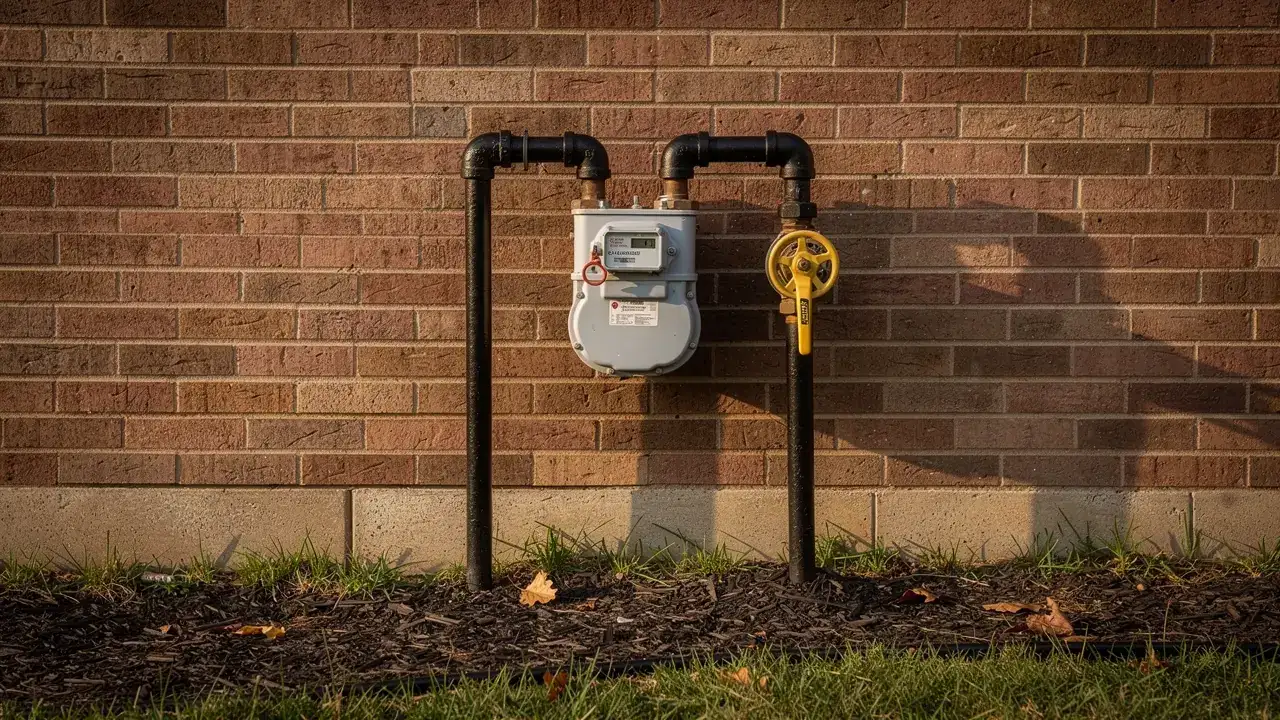
Know where your shutoffs are. There is one at each gas appliance and a main at the meter, and everyone in the house should know where to find them before they are needed. A quick look at the appliance valves once a year, to see they are reachable and not corroded or painted shut, is the kind of aftercare that costs nothing and pays off in the one moment it counts.
Watch the connectors and the area around appliances. Keep the space around a furnace or water heater clear of boxes, cleaners and anything that does not belong near a flame, and replace a flexible connector that looks cracked, kinked or crusty. If a pilot keeps going out or an appliance starts acting differently after a move or a repair, call us instead of relighting it again and hoping.
The safety rule is simple and it overrides everything else on this page. If you smell gas, leave the house first. Do not flip a switch, light anything, use a phone inside or look for the source. From outside, call your gas utility or 911. Once the line is made safe, call Master Mechanical at (615) 562-2525 and we will find the fault and repair it. Safe comes first, repair comes second.