Where a water heater and its plumbing give out
Most plumbing trouble in a house starts in a few places: the tank water heater, the shutoff valves under sinks and behind toilets, and the fittings where supply lines meet them. Valves that have sat untouched for years seize, so when you need one closed it will not turn, or it turns and still weeps. A slow leak at a fitting rarely announces itself. It shows up as a stained cabinet floor.
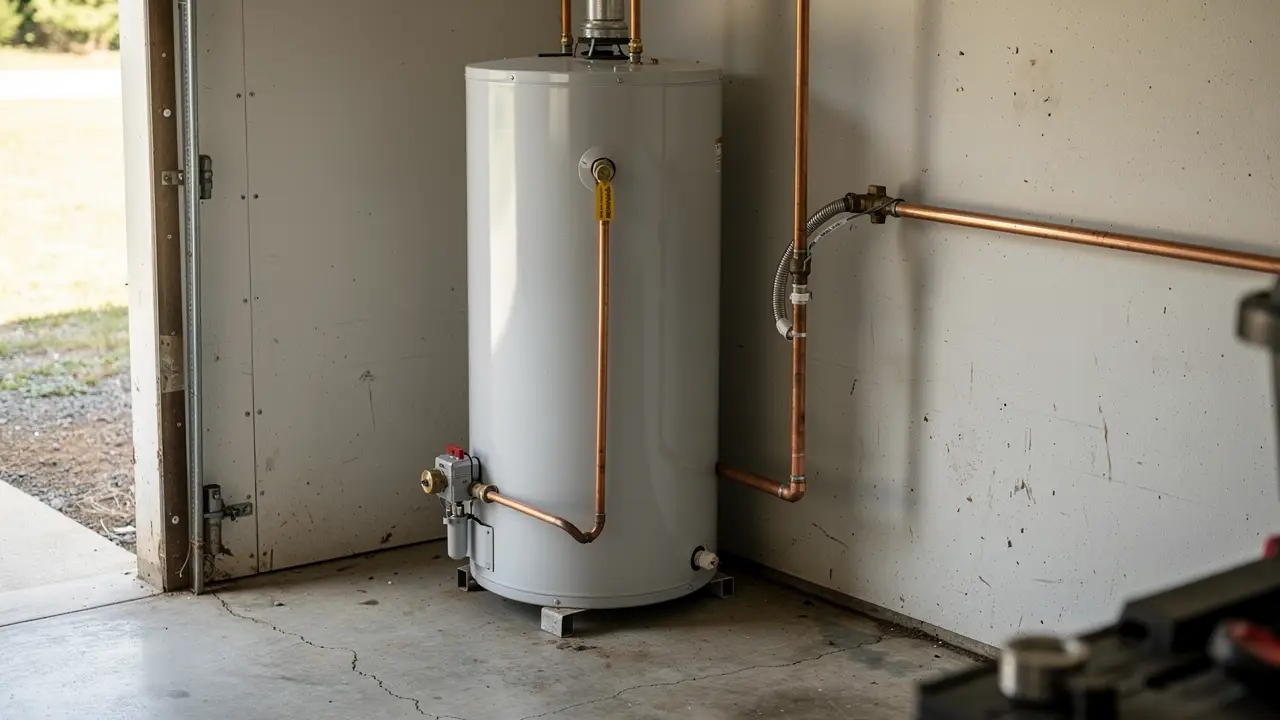
A tank water heater lives a hard life. Sediment settles on the bottom, the anode rod that protects the steel is consumed over time, and eventually the tank itself lets go at the base. The copper supply lines and the shutoff valve on top are often fine long after the tank is done, but they are the first things to get wet when something starts to go.
In Spring Hill, Columbia and the Maury and Williamson County areas around them, the pattern is the same: the early signs are small, a damp spot, a drip, a valve that has gone stiff. Catching them while they are small is the difference between replacing a fitting and replacing a floor. Call (615) 562-2525 when you spot one and tell us exactly where it is.
Find it, shut it off, repair the run
Plumbing work starts with finding where the water is really coming from, because it rarely drips where it shows. A tech traces the wet spot back along the pipe, looks at each fitting and valve along the way, and checks whether the problem is one failed joint or a line that is wearing out along its length. That decides the repair before any tools come out.
Next the water is shut off at the closest valve, or at the main if the local one will not close, so the repair happens on a dry line with no pressure behind it. The failed section is cut out and replaced rather than patched over, and old shutoffs that no longer seat properly are swapped for new ones so the next repair is easier to isolate.
Last, the line is brought back up to pressure slowly and every joint is watched for weeping before the job is closed. On a water heater that means checking the supply lines, the shutoff and the connections at the top, along with the base of the tank. Master Mechanical handles plumbing alongside heat and air, electrical and gas, so a repair that touches a wire or a gas line stays with one crew.
Two things every homeowner should know
Know where your main water shutoff is before you need it. It is usually near where the supply enters the house, at the meter, in a basement or crawlspace, or on an outside wall. Turn it by hand once a year so it does not seize, and make sure everyone in the house knows which way closes it. Knowing that can cap a burst line before it ruins a floor.
Then look at the base of your water heater now and then. A tank that is sweating, rusting at the bottom or sitting in a damp ring on the floor is telling you the steel is going. Rumbling or popping from sediment is worth noting as well. Heaters in garages and utility closets get ignored for years, so a quick look when you walk past is a habit worth having.
If you find a leak, close the nearest shutoff, then call. Describe where the water is, what has gotten wet and whether the valve closed. That lets the crew bring the right fittings and parts, whether you are in Columbia or on the Spring Hill side. Reach Master Mechanical at (615) 562-2525 or service@mastermechanicaltn.com and we will get back to you to set a time.