Change Your Air Filter Monthly: Why Such a Small Job Matters
The cheapest thing you can do for your heating and cooling system takes less than a minute, and most people put it off.
October 13, 2026 · 4 min read
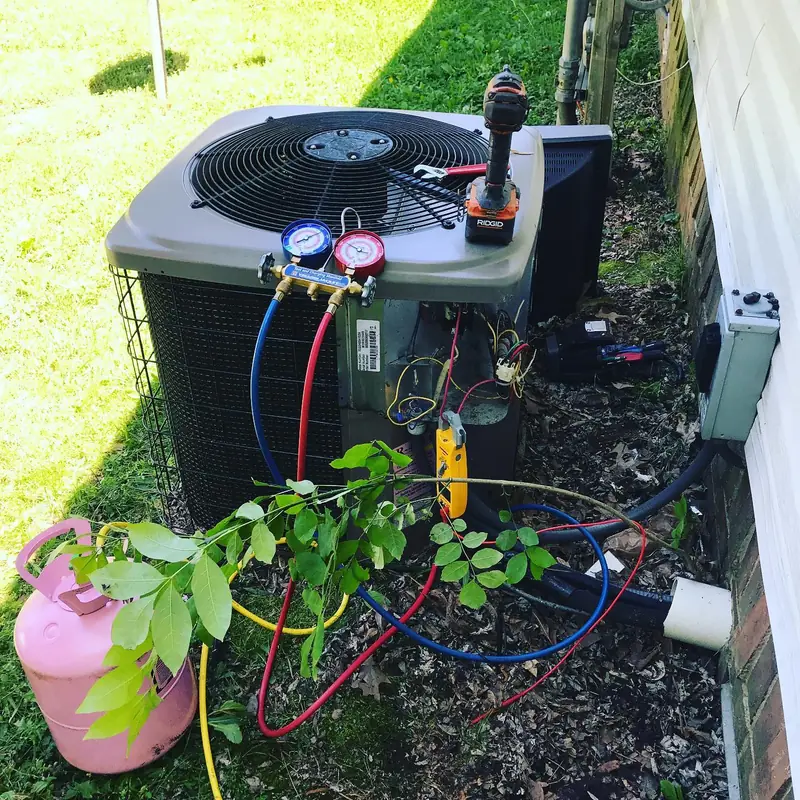
Ask any heating and air crew what a homeowner can do to help their system, and the answer is almost always the same: change the air filter. Master Mechanical puts it in its own tips. Change your air filter monthly, the cheapest and easiest way to increase your unit's performance and efficiency. It sounds too simple to matter. It matters because every bit of air your system moves has to pass through that one thin panel, and when the panel clogs, the whole system pays for it.
What the filter is actually protecting
The filter's first job is protecting your equipment, not just cleaning your air. Your furnace or air handler has a blower fan and an indoor coil, and in a cooling system that coil is a stack of thin metal fins with tiny gaps between them. Dust that slips past a worn-out filter settles on those fins and on the blower wheel. Once it builds up, it is hard to remove without a technician taking parts apart. A clean filter catches lint, pet hair and dust before any of that starts.
Filters come in different thicknesses and densities. A denser filter catches smaller particles, but it also resists airflow more and loads up sooner. The right filter is the one your system was set up to use, changed on a schedule it can keep up with. The size is usually printed on the edge of the frame, and a technician can tell you what your system was built around.
What a loaded filter does to airflow
Think of breathing through a thick scarf. You can do it, but every breath is work. A packed filter puts your blower in the same spot. The fan is sized to pull a certain amount of air across the coil and push it through the ducts. With a clogged filter, less air gets through, and the fan either strains or simply moves less air than the system needs.
In summer, that matters for a specific reason. The indoor coil is cold because refrigerant is absorbing heat from the air moving across it. If too little air crosses the coil, it can get colder than it should, and the moisture it pulls from your air can freeze on the fins. A frozen coil blocks even more air, which makes things worse, and when the ice finally melts you can find water where it should not be. That chain of events often starts with nothing more than a filter that was due weeks ago.
How to check your filter in under a minute
You do not need tools. The filter usually lives behind a return air grille on a wall or ceiling, or in a slot on the side of the furnace or air handler. Turn the thermostat to off before you open anything so the blower is not running while you work. Slide the filter out and look at it.
- Hold it up to a light. If you cannot see light through the media, it is loaded and should be replaced.
- Look for a gray or brown mat of dust across the face on the side the air enters.
- Check for lint or pet hair wrapped around the pleats.
- Check that the frame is not bent or collapsed, which lets unfiltered air slip past the edges.
- Find the airflow arrow printed on the frame. It points the direction the air travels, toward the blower.
How to swap it the right way
Write the size down or take the old filter to the store so you buy a match. Slide the new one in with the arrow pointing toward the blower, the same direction air flows through. A filter in backwards still fits, but it works poorly. Make sure it sits flat with no gaps around the edges, since air takes the path of least resistance and a gap means dust goes straight past. Close the cover or grille, turn the system back on, and you are done.
Making monthly a habit
A fixed monthly rule works because it removes the guessing. Some homes load a filter faster than others. Pets, nearby construction, a lot of open windows during Middle Tennessee's pollen season, or a dusty workshop all speed things up. A set date beats a vague plan to check when you remember.
Pick a date, like the first of the month, and set a recurring reminder on your phone. Buy filters in a multipack so a spare is always on the shelf. Some people write the install date on the edge of the frame with a marker, which makes the next check easy. If a filter still looks clean after a month, you can leave it in, but look at it every month anyway. The look takes seconds, and the habit is what protects the system through a hot, humid summer when the air conditioner runs hard and often.
Master Mechanical is a locally owned and operated company in Spring Hill, Tennessee, handling heating and air, plumbing, electrical and gas service. If your system seems to be struggling and a fresh filter does not help, call (615) 562-2525 and talk it over with the crew.
Master Mechanical, (615) 562-2525
Call (615) 562-2525More articles
Give Your Outdoor Unit Room to Breathe
The big metal box beside your house moves a lot of air, and it needs open space around it to do that job.
One Crew, Four Trades: Why Overlap Problems Need Fewer Calls
Houses do not divide their problems by trade, and a good number of repairs sit right where two or three trades meet.